

Nature is . . .
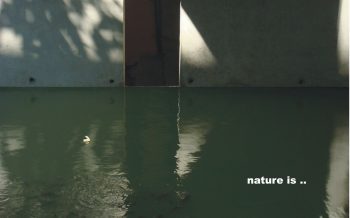
Rafiq Azam is one of the leading figures in contemporary architecture in Bangladesh. His fruitful twenty-year career has yielded a new vocabulary that continues to enrich and inform the unsure trends of contemporary practice. Rafiq’s architecture is sensual, earthbound and tactile, and is characterized by a deep sensitization to nature. His ‘human’ handling of space coupled with rare architectural wisdom has elevated his work to unexpected levels of sophistication. Rafiq is widely known in international circles. From Chennai to Australia, he moves seamlessly between contexts, countries and cultures. Rafiq has been honoured in many countries for outstanding work. He received the AR Award for Emerging Architects and the Kenneth Brown Asia Pacific Culture and Architecture Design Award in 2007. He was twice nominated for the Aga Khan Award for Architecture, in 2004 and 2007. Rafiq Azam and his team ‘Shatotto’ believe in ‘architecture for green living’. The current exhibition features various embodiments of their work and philosophy in terms photographs, video films, drawings and models. Bengal Gallery of Fine Arts is delighted to present ‘nature is…’ – a show portraying the talents of an extraordinary architect. – Bengal Gallery of Fine Arts Rafiq Azam was a student of third year in architecture when he designed and built the upper floor of their existing one storied house in the densely habited old part of Dhaka city. His family indulged this young enthusiast to put forward his ideas and beliefs into test. He opened up two spaces a dining area and an open to sky court in opposite directions balancing each other along the circulation artery of the upper floor of the house. The nicely proportioned court enclosed with raw hand made brick walls and diagonally placed thin MS angle pergolas not only created patterns of shades and shadows but also brought indirect light and air deep into the interiors of the house. The planted court and the open dining space together gave the house free flow of spaces and a sense of delight and freedom in an otherwise claustrophobic situation. Young Rafiq faced the challenge with courage, restrain and sensitivity and his family was proud of him. This initial success gave Rafiq a sense of inner strength never to fail a client. Bangladesh the largest delta on Earth, has 52 rivers that carry waters from the Himalayas in an intricate pattern to the Bay of Bengal. During Monsoon these rivers inundate two third of the country’s land depicting water the major element of the country scape. When the water recedes, it leaves a fine layer of fertile alluvial soil and the entire landscape is transformed into large patches of paddy fields bounded by clusters of lush green trees and plants spotted with colorful fruits, vegetables and flowers. Rafiq has seen these contrasts of nature with great sense of wonder and developed a passion for watercolor at the age of seven and won a number of national and international awards as a child artist. His love for nature and passion for watercolor are also discernable in the open court that he developed during renovation of his parental house, not far from the river Buriganga on the bank of which the city of Dhaka stands. Rafiq Azam began his practice in 1988 as a fresh graduate in architecture. Within 20 years of his practice he has been able to establish himself as one of the leading architects of Bangladesh, who understands the fact that achievements depend on creativity, hard work and credibility we are all to transmit to others. Rafiq’s works of architecture so far built can be understood as an extension of modernist ideals with his own kind of revisionism. His interest in painting and sculpture is easily detectable in his treatment of the surface and shaping of the form. His concern for a visually tangible and expressive architecture and a sequential arrangement of the spatial experience is unfailingly inspiring. His persistent interest in nature (green) and considering it an essential element for urbanistic architecture gives his high density living units a kind of landscapist humanism. His architecture is not quite principled yet refreshing even poetic and contains an element of ambiguity that seems to transcend a sense of infinity for mankind. Rafiq has so far designed and built a number of single family private houses, 6-storey housing blocks, shopping cum office complexes, a community center, an art gallery (renovation) and a 13-storey health facility complex. In recent years Rafiq seems to shift his position from a rather optical and graphical understanding of nature to a more perceptive concern for it. Instead of emphasizing the external collage like juxtaposition of interlocking forms he is gradually shifting his focus on more principled construction and interior volumes. In this quest he seems also to find water as the quintessential element of nature to work with for his essential architecture. In his new commissions he seems to be more sensitive to the anthropomorphic attitudes of culture, climatic issues and even cosmological references. He seems to believe that the poetic form in architecture is responsive to issues external to the building and incorporates the three dimensional expression of the myths and ethos of the society. He seems also to believe that a work of architecture should not push hard for its existence on the land rather it should share with the landscape and put its weight lightly on the surface of the mother earth, like a flower on the palm of open hard. Rafiq Azam has matured fast and is persistently development a consistent vocabulary of his own that would not only appropriate the architecture of Bangladesh but will also contribute to the world culture. Professor Shamsul Wares.
Artist: Rafiq Azam
Venue: Bengal Gallery of Fine Arts
Date: 15/12/2008 – 26/12/2008
Exhibition regular hours: 12 PM – 8 PM
Entry condition: Open for ALL