

In.Between
He is known to be reserved. To be meticulous and somewhat enigmatic. Wakilur Rahman stands out in the crowd – the shaven head, the philosopher’s spectacles, the sharp beard his appearance is just as chiseled as his ideas. There is a harmony between the man and the product of his labor.
Identity is a recurrent subject here in Bangladesh, but Wakil is one of the few people who has escaped the crisis. His travels in South Asia and long sojourn in Germany have not made him distant from his land and its character, on the contrary, from a distance he has discovered and defined his sense of self as an artist, as a Bangladeshi. Text, he says, is the best visual representation of national identity. It is not a statement of nationalism and not a reference to the Language Movement, but a declaration of self. He has worked extensively in developing fonts and has completed a 7 x 21 meter aluminum wall installation in the Grameen Centre in Bashundhara which comprises of more than 9000 names of thanas, cities, towns, and wards a record of old place names mixed with the new.
The spectator is a reader in front of Wakil’s works a disoriented reader at that. The Bengali script is at once recognizable and illegible, the lines overlapping one another, letters or parts of sentences are blotted out or drowned in ink, the meaning barely shining through. And then there are the works with independent letters abstracted from meaning or place, standing alone, attesting their individuality. It is a fusion of semiotics and esthetics seeing is understanding.
Wakil’s fascination with calligraphy goes back to his student days in China and is a recurrent theme in his career. His second point of reference is architecture, many of his works in the past have been space/site specific – works that are not designed to be showcased in parlors and living rooms but to exist in a short period of time, leaving behind just a photo record and a memory. This is a huge leap from the market demands and tendencies of Bangladesh. But Wakil, is an artist who can be seen laughing about such things. He lives by the Bible of the vagabond indifferent and detached.
It is Wakil’s objects that are the most playful. For instance his recent’archival’ works glass cases filled with shreds of drawings and watercolour landscapes. The whole notion of archiving is turned on its head as you look at these absurd capsules of the artist’s works from 1997 – 2003.
Then there are the living books, books which have ceased to serve their original purpose and have become symbols. They are no longer meant to be read, but to be watched as they change with time, some growing ferns, others cracking. The idea of these strange objects is like a seed which is planted in the mind of the spectator to germinate, creating new meanings and new ideas.
In “Monsieur Ibrahim and the Flowers of the Quran,” a short novel written by Eric-Emmanuel Schmitt, the flowers are perceived as a metaphor for the beauty of the words of the scripture. But the real beauty is the moment when the Monsieur Ibrahim’s Quran is opened, and inside are dried flowers. This physical manifestation of the metaphor is at once simple and incredibly touching. Something similar happens with Wakil’s living books.
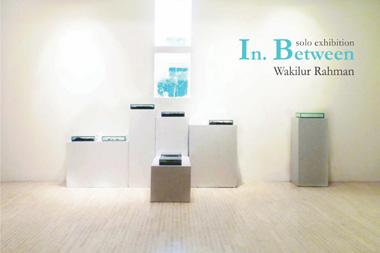
On the opening day of his solo exhibition at the Bengal Art Lounge, Wakil unsealed three of the transparent boxes in which lay open books in different environments. One book was obscured by dry grass and soil, the lid covered in weighty droplets of moisture. One book had grown salad leaves from the pages. Another soaked in white oxide, water and gum. These works, titled Song of Tide, were not meant to last forever, they were meant to inspire, to represent the evolution and flow of concepts, from book to person, from person to book. The little leaves were meant to die and dry, perhaps one day under the right conditions to sprout again.
Date: 15.03.2013 – 26.03.2013
Venue: Bengal Art Lounge
Organiser: Bengal Foundation