

The Body and Soul of the Insignificant
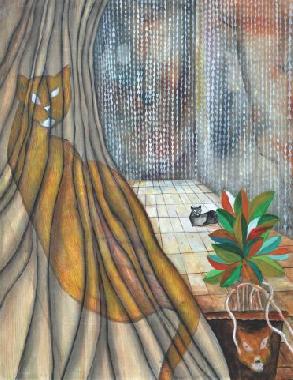
The turn of the century has transformed the face of visual arts and has thrown it into a hitherto unknown realm of aesthetic confusion. Art of the current century is characterized by pluralism of every sort, visual arts being practiced in a variety of forms and such terms as multi-disciplinary, multi-dimensional, multi-cultural, alternative, collaborative, site-specific, and so on, have become popular jargons among the younger generation practitioners. There has developed an impression that such traditional art forms as easel-painting and sculpture are out-of-date and working in those modes offers them no future. This has created a situation with no firm and clear direction and an air of confusion in the visual art scenario. It is true that modernism’s fall from grace with the dismissal of its formalist, unitary and puritan approaches paved ways for alternative ideas. The ‘post-modern’ concepts, despite their enigmatic and controversial attributes, have played a phenomenal role in transforming the face of visual arts and have provided space for non-western and out-of-the-mainstream cultures. Nevertheless, the concepts of modernism and postmodernism remain dominantly Eurocentric in character despite examples of heterogeneity. Postmodernism, in particular, allowed space for accommodation of cultures outside the arena of mainstream western art and a great freedom of choice in adopting techniques and selecting materials. But the manifested examples of most of our postmodernist works remain heavily dependent on references from western culture. On the other hand, our own doctrinal art did not encourage humour or sarcasm as such, though the lighter side of the commonplace life was often reflected in what is known as folk and popular arts or the so-called ‘minor’ arts where artists had more freedom of choice. This imperious viewpoint began to change in the 1970s when the myth of universality in art, which was most apparent in abstractionist works, was put to question and a new trend of object-oriented art began to flourish. The post-modernist viewpoint of plurality in all spheres of creative activity and its assertion of accommodating the trivial and the indigenous in them have helped such expressions to be widely used in the practice of contemporary art. Tasadduk Hossain Dulu stands slightly apart from the aforesaid trends. He belongs to a new genre of the younger art activists in Bangladesh, but has not been carried away by the contemporary vogues and has not shifted to such idioms as installations, performances, videos or sight-specific arts. Dulu has stuck to the traditional painting in oil and acrylic and his paintings cannot also be termed ‘conceptual’ as such. He started very humbly by painting negligible objects around him from everyday household with tentative strokes of his brush. Dulu’s present works can be termed as testimonies of progress and advancement from where he has started. His earlier depiction of objects of our own everyday life with an air of wit and humour remains, but whereas his works previously had presented a motionless moment from life, most of his works in this display lean towards a narrative pattern. He now places among the folds and knots of his very favourite curtains and fabrics, animals, birds and dolls in action. They are poking their heads from between the folds or chasing each other in a make-belief landscape on the screens. They are at times quiet and innocent-looking, but in many of them the animals move forward in a threatening mood, a snake’s emergence from between the folds is particularly unnerving. Yet they don’t even look like their real counterparts, rather resemble our own folk dolls and at the same time mirror a sense of humour and amazement.
In majority of his paintings, Dulu uses simple images or objects and surprises one by his keen sense of sarcasm and irony. What is important about Dulu’s paintings is the amalgamation of a contemporary vocabulary and a local flavour which can very rarely be seen in the works of his other contemporaries. His works display a unique quality of the combination of the global and the local. When one penetrates deeper into Dulu’s paintings and gets into the metaphorical messages behind the trivial object and the apparent wit, one finds them more refreshing and exciting to observe and study. Tasadduk Hossain Dulu stands out as one of the most fascinating young artists of the contemporary art world of Bangladesh and the showcasing of his recent works will hopefully bring this to light.
Date: 02.04.2013 – 13.04.2013
Venue: Bengal Shilpalaya
Organiser: Bengal Foundation