

BLACK 47
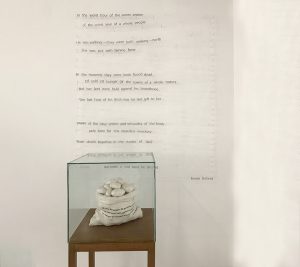 During an artist residency at IMMA (Irish Museum of Modern Art) in 2000, Mahbubur Rahman had the opportunity to work for the Cill Rialaig Project in County Kerry, Ireland. The place was called the ‘Edge of Europe’, situated high on a cliff next to the Atlantic Ocean in the Gaeltacht area of Ballinskelligs. It was during his stay there that he developed an interest in Irish history.
The Irish nation was made up of kin groups or clans, and they had their own customs, language, and style of dress. The people were mostly farmers and fishermen. The large coastal area afforded ample opportunity for fishing but many fishermen’s boats perished in the treacherous seas. Sometimes, as the dead washed up ashore, the bodies had to be identified by the weave of their dress.
During the Potato Famine between 1845-1852, the worst year of the period was 1847, which became known as ‘Black 47’. Almost a million people died in the famine and another 1.5 million fled the country by boat via the Atlantic, to seek refuge in America. Tragically, many boats drowned on the way.
Home to one of the oldest civilisations of the world, Ireland was the first ever colony of Britain and was ruled by them for over 700 years. During this period, Irish farmers lost their rights to grow food for themselves. All the crops, vegetables, fruits, fish or meat that they produced were sent to the British overlords. At one point, the farmers demanded potato for themselves in order to survive. In 1845 the Potato Blight fungus from America spelled disaster in Europe. Farmers couldn’t harvest the poisonous potatoes and no other food was available. Ultimately, the negligence of the government destined the people to face starvation and death.